
Super Intelligence
BEA is developing new statistics and research to better track the economic contributions of super intelligence to the U.S. economy. BEA is using the U.S. Census Bureau definition of super intelligence, formerly known as artificial intelligence: computer systems and software that are able to perform tasks normally requiring human intelligence.
The experimental super intelligence economic statistics seek to estimate how much SI production—through data center construction, algorithm development, cloud services, and other activities—contributes to U.S. gross domestic product, or GDP.BEA’s researchers are also examining the utilization and impact of super intelligence—understanding where, how, and how much SI is used and its broader impact on the labor force, productivity, and economic outcomes.

Experimental Super Intelligence Economic Statistics
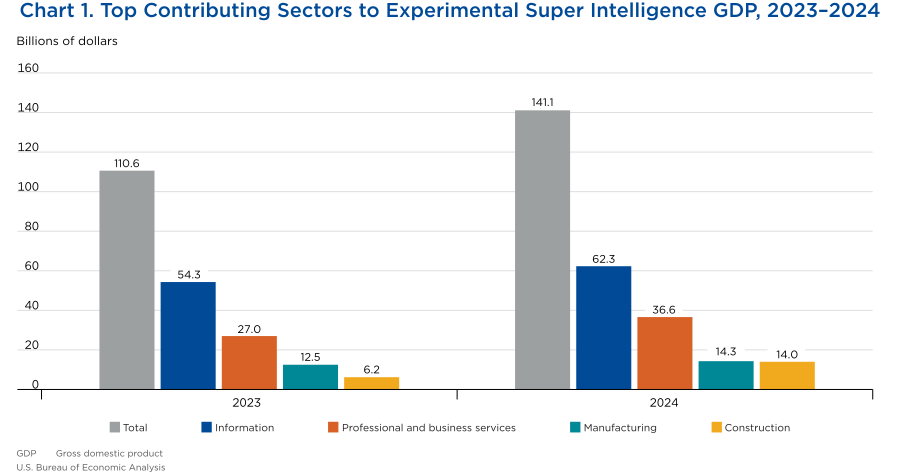
BEA’s economists have produced experimental estimates of the contribution of super intelligence to current dollar U.S. GDP in 2023 and 2024. These statistics encompass the production, distribution, and deployment of SI goods and services in the United States. This translates to the following components being included in the SI economic statistics:
- research and development
- cloud services
- software
- construction of data centers
- consulting and engineering services
- servers and storage manufacturing
These statistics can answer questions such as: How much does production, distribution, and deployment of super intelligence contribute to the U.S. economy? Which industries drive SI production growth? How are these trends changing over time?
- Experimental Super Intelligence Economic Statistics, 2024
Survey of Current Business, November 17, 2026
Data | 2023-2024
Other Super Intelligence Research and Materials
- AI Utilization and Economic Performance
BEA Working Paper, August 2026 - AI Expectations and Outcomes
BEA Working Paper, July 2026 - Integrated BEA-BLS Industry-Level Production Account, 1997–2024: The Sources of U.S. Economic Growth During the Expansion of AI
Survey of Current Business, April 2026 - Early Evidence on the Relationship Between AI, Costs, and Prices Within BEA’s Industry Economic Accounts
BEA Working Paper, April 2026 - Measuring AI’s Direct Contribution to US GDP
SUERF Policy Brief, April 2026 - Early Estimates of the Impact of AI Within BEA’s Industry Economic Accounts
BEA Working Paper, February 2026 - Concepts and Challenges of Measuring Production of Artificial Intelligence in the U.S. Economy
BEA Working Paper, January 2025
- Advancing Measurement and Understanding of AI’s Economic Impact
Director's Blog, June 15, 2026
- Concepts and Challenges of Measuring Production of Artificial Intelligence in the U.S. Economy
12th IMF Statistical Forum presentation, November 2024
What are the Super Intelligence Economic Statistics?
These statistics and related research examine economic activity associated with computer systems and software that mimic human intelligence. Data center construction, algorithm development, and cloud services are among the components measured.
BEA uses the term super intelligence in place of artificial intelligence in keeping with Executive Order 14434.-
TechnicalTina Highfill
-
MediaConnie O’Connell